Showing posts with label wilderness therapy. Show all posts

Thursday, January 8, 2009

Inviting Openness


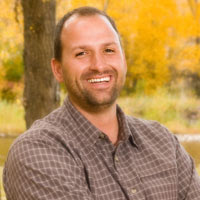
By: Mike Escalante, Program Director


I started working for a wilderness therapy program in 2003. When I began, I think only the “wilderness” part of wilderness therapy had caught my attention. I instantly fell in love with the job as it entailed hanging out with a bunch of guys in a beautiful Arizona mountain landscape. As time went on, I worked for other programs and became more and more aware of the “therapy” side. I became introduced to a variety of therapeutic theories and intervention modalities focused on facilitating change. Some of these theories interested me and others felt hokey or even oppressive.

By the time I worked for my third program, I honestly felt flooded in a sea of information and theories about “change” that oftentimes seemed to miss the mark. One theory seemed to contradict another while others seemed to be a lexical reorganization of yet other theories. After years of working with youth and implementing a whole gamut of interventions, I discovered a fundamental and necessary component of “change”. Stated simply, I learned that seeds of growth can only take root in a person when he is open to the idea of growth. I realized that each student I work with had to come to a place in their heart and mind where they were at peace with a successful outcome. When students found this open place, seeds of change could be planted and cultivated.

After making my long overdue discovery, a few things became apparent. When at war emotionally with others, we excuse ourselves from our negative behaviors. Therefore, accusing is almost always accompanied with excusing. In other words, if a student is focused on how she has been wronged by her parents and program staff than she will naturally accuse others of warped perception and excuse her actions in the interplay. Terry Warner eloquently explains this paradigm in his masterpiece The Bonds That Make us Free.

These realizations fostered a significant change in the way I viewed my role. As a caregiver, mentor or guide, my greatest challenge and responsibility was to invite my students to an open place. Openness, I have found, is the only foundation that supports the weight of lasting change. Of course my realization was not accompanied by a universal equation for eliciting openness. Rather, my realization has helped me develop a new focus and realize that my invitation must come from a place of personal openness and peace.

Fortunately, I found Aspiro, or Aspiro found me.

Aspiro is an organization that actively seeks to instill a sense of openness in its employees and students.

Furthermore, Aspiro explicitly invites openness with our students’ families during our family workshop.

It has been awesome to see parents and children drop their accusing and excusing emotions and hence regain the ability to see themselves and others clearly.

Now, as the program director for Aspiro, I get to work closely with guides and clinicians in training and program development. I am constantly astounded at the simple ways our field guides and clinical staff touch the lives of the students we work with.Throughout the years I have studied many therapeutic theories that have appropriate application to our work, yet none of them have the power to foster change if the person most in need of change is at war with the idea. My invitation to all of my employees, as well as to anyone who works in our important industry, is to free ourselves as much as we can from accusing and excusing emotions so that we can invite the same in our students.

Monday, December 15, 2008

Choosing Aspiro - By Brad Carpenter, Psy.D.


Perhaps you as a parent or an educational consultant are considering the same thing. I was about a year and a half ago.


Mine is a different story, however, which began about 14 years ago at a military base in Atlanta, Georgia. This was my introduction to therapy and needed transition from an academic knowledge of psychology to reality.


My first client, a 40 year old African American woman suffering from depression, left the session somewhat exasperated and remarked that she couldn’t believe that “Donnie Osmond” was her new therapist.This was precisely when I began wearing suspenders and a tie to work every day in an effort to achieve age and credibility. My second client was a couple who came for marital therapy and promptly asked if I was married or had any children. Quick witted, I replied something to the effect that I didn’t need to be shot to know that it would hurt!


This, my valiant attempt to explain that it was not necessary to have first hand knowledge of their situation to be a good therapist, a message understandably obscured by the comparison of marriage to a mortal injury.


Needless to say, I learned to button up more than my oxford after this and listen.


My third client was a bright 15 year old girl who was seen because of oppositional behaviors and underachievement. Having problems getting her to speak I decided to join her in silence, a technique I learned from Robin Williams in Good Will Hunting, not my graduate psychotherapy course.


Instead of paving the way for the dramatic break through, she yelled at me and told her parents I wouldn’t even talk in therapy. They were naturally concerned.


Almost a decade and a half later, armed with wisdom, experience and a receding hair line I was lucky enough to have a choice as to the direction of my career. Over the years I had specialized as a diagnostician, performing psychological neuropsychological assessment with a secondary role as a therapist. I was moonlighting as an adjunct professor of psychology for a local college when I was asked to teach an introductory therapy course to graduate counselors. For a while I was a back to where I started, rediscovering my roots as a therapist, joking with my students about my pop star past and preparing them for what’s to come. What I have learned over the years is that therapy is an art and while there are some who would disagree with this statement as is, they may not disagree with the assertion that adolescent therapy is an art. I could say this with some certainty after working in the therapeutic boarding industry for almost three years while contracting with an adolescent wilderness therapy program. I was particularly intrigued by the prospect of the adolescent wilderness experience and heard the buzz that some colleagues had taken this concept a step further, creating a high adventure therapy program called Aspiro.


Disillusioned by the status quo and the primitive wilderness model, I was excited to hear that the industry was evolving. Fortunately, I had many choices, but realized after a brief visit that I had found my dream job and quickly made the decision to move across country to join the group.


Aspiro has taken the successful elements of traditional wilderness therapy and raised the bar significantly.


When I refer to a “primitive” wilderness therapy model, I don’t mean to discount the effectiveness or inherent sophistication of a model which has helped countless numbers of adolescents in beginning to turn their lives around. I simply refer to an outdated traditional model in which adolescents learn basic skills (breaking a fire) while backpacking around a restricted area, sometimes far away from civilization.


Aspiro’s adventure therapy model combines the benefits of the traditional wilderness experience with overwhelming mastery experiences - climbing 200 feet off the ground, free rappelling a 150 foot arch, paddling a class 4 rapid, summiting a 13,000 foot peak, building ice caves, skiing, snowboarding and mountain biking.


And best of all, I’m right there with them.


My first therapy experience at Aspiro was paddling a 25 mile stretch with a student who had recently become involved in drugs, an intelligent young man who I had seen a hundred times before in a different setting.


It was here though, floating down the Green River that I knew I had shed my suspenders for good, in this place without walls, florescent lighting or plaques. I was no longer just an authoritarian but a participant, paddle in hand. It was in this place and many others since that I noticed the resistance I had encountered in a traditional setting was no longer there or significantly diminished. Suddenly the clients were negotiating their way through tricky situations, ones I didn’t read about in an intake report but was observing in the moment.


They were there, right before my eyes, pushing themselves, interacting with other students and all the time humbled by nature. Not only were we collaborating in therapy but together we had accomplished something significant by days end. The students were building confidence and learning real skills through mastery experiences. They were more alert and receptive from the adventure and the novelty of the environment, a benefit also shared by myself. Every week I knew that when I saw my student, he/she would have a story to tell me, a story of struggle and accomplishment. This was the same story I heard a year later from the student I shared a paddle with my first day. He had continued his adventure in Costa Rica, drug free, now a high school graduate and using the same skills he had learned a year earlier at Aspiro.


So choose wisely as I did. Every student and family situation is unique and every therapist has a different calling. I found mine here in Utah. In the past year, Aspiro bought out its parent company and is now independently owned by its therapists and the original founders who have a personal stake in its success. We have grown, refined our model and adapted to the needs of our students, families and consultants.


This is by far the coolest place I have ever worked and I appreciate all the support I have received from our staff, my students and the many parents and consultants I have worked with since joining Aspiro.


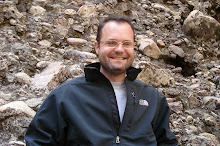
Dr. Brad Carpenter - Psy.D.