Showing posts with label parents. Show all posts

Tuesday, March 24, 2009

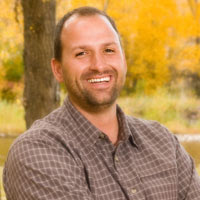
Jessi Irvin Joins Aspiro Group


For Immediate Release
March 24, 2009


(Mount Pleasant, UT) Aspiro is pleased to announce the hiring of Jessi Irvin as a therapist in our unique Wilderness Adventure Therapy (WAT) model.

Our management team is thrilled to have the opportunity to work with such a respected, outstanding therapist, said Brian Church, Vice President, Business Development.

"Jessi will play a major role in our continued growth as a program, and is a wonderful addition to our clinical team."

"I felt very connected to and welcomed by everyone I met there," said Irvin. "I love the adventure component as a means for challenging kids to look at their patterns, while giving them an opportunity to increase their confidence and push themselves outside of their comfort zone. I'm excited to interact w/ students and share in their adventures. I like the structure, coupled with the flexibility in my role as a therapist to coordinate a student's program based on their needs and those of their family. I'm also excited about the strong parent involvement, which I've so come to appreciate in my work at Three Rivers Montana. It's important to have the support of parents while their kids are away and also necessary, I believe, to have them involved in doing their own work and work as a family if there is to be true, lasting change."

"I worked at Three Rivers for nearly three years and have loved working with kids and families in the wilderness," said Irvin. "I feel very comfortable in that role, along with the expectations related to working with consultants and attending conferences. I enjoy the opportunity to network and meet people face-to-face, since so much work is done over the phone. There's an intimacy that comes with this work we do in this industry that really fits for me. I've also maintained a very small private practice while at Three Rivers and have enjoyed working with adolescents and young adults in transition. Prior to working at Three Rivers, I was a therapist at a few local, community-based counseling clinics. While there, I worked with a broad spectrum of clients, including families, adults, couples, young children and adolescents facing a wide variety of challenges."

Jessi will be moving to Utah, from Montana, over the next month, and will begin taking on a case load the first week of May. Please join us in welcoming Jessi to Aspiro.

Business Office: (801) 349-2740 | Toll Free - 888-266-5136

Monday, December 29, 2008

Philosophy of Bouldering - The Project

One of the experiences that Aspiro provides year-round for its participants is the sport of bouldering.

Bouldering is a form of rock climbing where the athlete climbs only as high as it is safe to fall, but does not use a rope. Instead, guides and peers use gymnastic ‘spotting’ techniques and specially-designed ‘crash pads’ to keep the athletes safe. Boulderers typically climb on boulders instead of cliffs, eliminating the risk of rock fall from above, and adding the reward of being able to stand on top of the ‘conquered’ climb and rest.


Routes that boulderers climb are called ‘problems’ and usually consist of only a few (usually 6-12) moves that are much more challenging than typical rock climbing, and often much more gymnastic. Bouldering can be at once frustrating and engaging, overwhelming and peaceful, painful and comforting, social and individual.


The glory of bouldering is that the greatest experiences are intimately related to the worst experiences.


The highs depend on the lows. In bouldering, a successful climb is simply not rewarding unless it is a successful climb that was fought for. The more difficult a problem is for a boulderer, the more she must fight for the climb, and the more she fights for the climb, the greater the thrill when she stands on top of the boulder, basking in the overwhelming sensations of victory. Of course to achieve this reward, she must outlast a wilderness of despair, as she second-guesses and doubts her strength at every fall, fall after fall.


The blessing and the curse of such a sport, is that no problem is impossible, but nearly every problem is improbable. At Aspiro, we seek to engage every staff and student in the ‘Project Experience’. Boulderers of all levels, when they arrive at a new area, use guidebooks, ratings, and word of mouth to find the problems that seem most appropriate for their skill level. Much of their time is spent familiarizing themselves with the style of climbing in the area, and the relative scale of difficulty ratings. In every case, however, what the climber is really seeking is “The Project”.


The Project is the one climb that he cannot climb the first day, the first week, or even the first month. When he feels the first holds, he believes it is impossible. Yet there is a beauty to this problem- it calls out to him and invites him in. At first he tries it and it confirms to him that he will need to return another time, 3 years maybe, 5 years maybe, to climb it. It confirms to him that he is simply not strong enough, determined enough, or resilient enough to attempt it yet. Maybe later.


As he climbs other problems around it, he successfully completes the easier problems in 1, 2 or even 5 tries.


It feels good, and he is proud of himself, but still the Project calls to him. Eventually he cannot ignore it and he gives it his first real attempt. Rejection!! Further confirmation that this climb is not possible for him, he is not good enough, not ready. He is conflicted inside, he does not want to experience rejection again, but he wants to climb the project. He throws himself at the project again, despite his conflicting feelings. A cycle of enthusiastic attempts and disheartening rejections follows until finally, the climber tries the first move, and it feels different… he understands it differently.


“If I only squeeze this muscle this way, balance on my toe this way, and throw my body skyward exactly this way… perhaps it is possible,” he thinks to himself.


And then success comes. He can do the first move. Thrilled over such an accomplishment, the climber invites her friends to come watch, throws herself at the project and the project dismisses her once again.


She is finally beginning to understand the curse of a sport that seemed so fun and so relaxing just an hour ago.


No matter how much effort she puts into the first move of a problem, and even when she finally figures it out and understands it, she must still climb that first move and put all the same energy into it every time she gets on the problem, if she ever wants a chance to climb the second move. It does not become suddenly easy because you succeeded once. Likewise, it does not become suddenly harder because you have failed once.


The rock is constant, we are the ones who change. To overcome the problem, we must not change the problem without- that is never enough. We must change the problem within. The cycles of overwhelming success and victory, and crushing defeat are very normal in the sport of bouldering. As professional boulderers exist in all sizes and shapes, one can guess that external strength, height, weight, age, or natural abilities do not determine a successful climber, or how much one falls in love with the sport. It seems obvious with even a little experience, that success is determined by strength of heart, not strength of arm. It is what is inside that counts. It is the climber’s ability to accept any failure as temporary, to accept failure as little more than a stepping stone to her goals that determines whether or not she will succeed. As guides at Aspiro, we strive to make this process happen at least once for every student, staff, and visitor in the field. It is more than a hope, it is an expectation. One can watch professional climbers work projects for years before success.


This resolve is a quality that we admire at Aspiro. We hope to build a community and an environment that supports opens doors- a place where we can test our resolve and even grow it.


As staff and students at Aspiro, we share a unique season of therapy. It is a season of challenge, frustration, overwhelming accomplishment, and deep respect for each other’s struggles. It is a therapy we share.


Staff refuse to be ‘teachers’ who have all the answers that the students must absorb. Staff instead become teachers who inspire passion, craft experiences, and share burdens. We grow to love and hate bouldering as it begins to represent both our victories, and our unfinished projects.


We return with excitement and trepidation. We learn to guide each other through the experience, provide the community of support, and be the invisible force that helps each other to succeed. And of course, we all have the opportunity to see ourselves overcome, to engage in a contest that is both against ourselves and greater than ourselves, and to experience the ultimate rush, the goal of all boulderers, The Project.


Dan LeMaire

Monday, December 15, 2008

Choosing Aspiro - By Brad Carpenter, Psy.D.


Perhaps you as a parent or an educational consultant are considering the same thing. I was about a year and a half ago.


Mine is a different story, however, which began about 14 years ago at a military base in Atlanta, Georgia. This was my introduction to therapy and needed transition from an academic knowledge of psychology to reality.


My first client, a 40 year old African American woman suffering from depression, left the session somewhat exasperated and remarked that she couldn’t believe that “Donnie Osmond” was her new therapist.This was precisely when I began wearing suspenders and a tie to work every day in an effort to achieve age and credibility. My second client was a couple who came for marital therapy and promptly asked if I was married or had any children. Quick witted, I replied something to the effect that I didn’t need to be shot to know that it would hurt!


This, my valiant attempt to explain that it was not necessary to have first hand knowledge of their situation to be a good therapist, a message understandably obscured by the comparison of marriage to a mortal injury.


Needless to say, I learned to button up more than my oxford after this and listen.


My third client was a bright 15 year old girl who was seen because of oppositional behaviors and underachievement. Having problems getting her to speak I decided to join her in silence, a technique I learned from Robin Williams in Good Will Hunting, not my graduate psychotherapy course.


Instead of paving the way for the dramatic break through, she yelled at me and told her parents I wouldn’t even talk in therapy. They were naturally concerned.


Almost a decade and a half later, armed with wisdom, experience and a receding hair line I was lucky enough to have a choice as to the direction of my career. Over the years I had specialized as a diagnostician, performing psychological neuropsychological assessment with a secondary role as a therapist. I was moonlighting as an adjunct professor of psychology for a local college when I was asked to teach an introductory therapy course to graduate counselors. For a while I was a back to where I started, rediscovering my roots as a therapist, joking with my students about my pop star past and preparing them for what’s to come. What I have learned over the years is that therapy is an art and while there are some who would disagree with this statement as is, they may not disagree with the assertion that adolescent therapy is an art. I could say this with some certainty after working in the therapeutic boarding industry for almost three years while contracting with an adolescent wilderness therapy program. I was particularly intrigued by the prospect of the adolescent wilderness experience and heard the buzz that some colleagues had taken this concept a step further, creating a high adventure therapy program called Aspiro.


Disillusioned by the status quo and the primitive wilderness model, I was excited to hear that the industry was evolving. Fortunately, I had many choices, but realized after a brief visit that I had found my dream job and quickly made the decision to move across country to join the group.


Aspiro has taken the successful elements of traditional wilderness therapy and raised the bar significantly.


When I refer to a “primitive” wilderness therapy model, I don’t mean to discount the effectiveness or inherent sophistication of a model which has helped countless numbers of adolescents in beginning to turn their lives around. I simply refer to an outdated traditional model in which adolescents learn basic skills (breaking a fire) while backpacking around a restricted area, sometimes far away from civilization.


Aspiro’s adventure therapy model combines the benefits of the traditional wilderness experience with overwhelming mastery experiences - climbing 200 feet off the ground, free rappelling a 150 foot arch, paddling a class 4 rapid, summiting a 13,000 foot peak, building ice caves, skiing, snowboarding and mountain biking.


And best of all, I’m right there with them.


My first therapy experience at Aspiro was paddling a 25 mile stretch with a student who had recently become involved in drugs, an intelligent young man who I had seen a hundred times before in a different setting.


It was here though, floating down the Green River that I knew I had shed my suspenders for good, in this place without walls, florescent lighting or plaques. I was no longer just an authoritarian but a participant, paddle in hand. It was in this place and many others since that I noticed the resistance I had encountered in a traditional setting was no longer there or significantly diminished. Suddenly the clients were negotiating their way through tricky situations, ones I didn’t read about in an intake report but was observing in the moment.


They were there, right before my eyes, pushing themselves, interacting with other students and all the time humbled by nature. Not only were we collaborating in therapy but together we had accomplished something significant by days end. The students were building confidence and learning real skills through mastery experiences. They were more alert and receptive from the adventure and the novelty of the environment, a benefit also shared by myself. Every week I knew that when I saw my student, he/she would have a story to tell me, a story of struggle and accomplishment. This was the same story I heard a year later from the student I shared a paddle with my first day. He had continued his adventure in Costa Rica, drug free, now a high school graduate and using the same skills he had learned a year earlier at Aspiro.


So choose wisely as I did. Every student and family situation is unique and every therapist has a different calling. I found mine here in Utah. In the past year, Aspiro bought out its parent company and is now independently owned by its therapists and the original founders who have a personal stake in its success. We have grown, refined our model and adapted to the needs of our students, families and consultants.


This is by far the coolest place I have ever worked and I appreciate all the support I have received from our staff, my students and the many parents and consultants I have worked with since joining Aspiro.


Dr. Brad Carpenter - Psy.D.

Friday, November 28, 2008

Aspiro new base camp offers amazing views


Aspiro Group, Inc. is excited to announce the move from our former (leased) base camp to our new facilities to the south of Salt Lake in Mount Pleasant (near Wasatch Academy).


Compared to our former home, our newly purchased facilities are equidistant from the Salt Lake International Airport in good weather seasons, and 30 minutes closer during the winter months. The move took place two weeks ago.


“Accessibility was an important reason,” said Brian Church, Aspiro Director of Business Development, “but numerous other factors played into the equation. Because we make use of many pristine areas throughout the state of Utah, our new facilities are much more central and will create significant savings in time, fuel, and other expenses. We were also able to secure the perfect scenario with respect to our office/warehouse, and base camp acreage.”


We have a 7,600 square foot facility which is ideal for many purposes including staff offices and conference areas with a cozy fireplace. Within the building is a 4,000 square foot warehouse.


Additionally, we have a 2,100 square foot space for future family workshops and staff trainings.


Within a 12 minute drive from our offices, Aspiro has acquired 120 acres of spectacular land, bordering the National Forest. Our new base camp offers amazing views at its’ higher elevations, and a blank slate for master planned growth well into the future.


As with our old property, students will be at base camp one day every other week, at a minimum (Vantage Point by Aspiro will use base camp 2-4 days/week on avg).


As always, we thank you for your support in this cutting edge high adventure model. We look forward to future consultant visits and sharing the new tools we have at our disposal. We know that this move will assist greatly in the work we love.


Aspiro 1-888- 266-5136 or (801) 349-2740