Showing posts with label wilderness program. Show all posts

Tuesday, January 20, 2009

A Shifting Paradigm


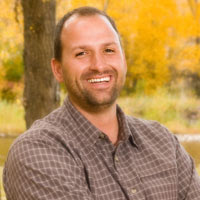
By: Josh Watson, LMSW


“Change” seems to be the nation’s mantra as we welcome a new year with open arms. We are a nation that is constantly evolving based on several factors associated with things like technology, environment, family dynamics, disease, political decisions, and economic conditions. These are obviously just a few examples of issues that trigger change and require adaptation on more of a global scale. However, as a therapist in the private treatment sector I must not ignore best practice methods that are consistently changing to meet the needs of struggling teens and families.

More specifically, I am a therapist by trade, but I am also a minority owner and Director of Admissions for the Aspiro Group of Programs. Aspiro is a very innovative and clinically sophisticated, outdoor program that provides a strong emphasis on adventure therapy to targeted groups of adolescents and young adults. One of the primary reasons we created Aspiro was to address the ongoing needs that are constantly changing for teens and families. These needs are a direct reflection of the issues we deal with on a global scale that I made reference to earlier. One of our mantras at Aspiro has been to “think outside of the box.”

This is not only something our staff does internally, we also teach our students and families to do the same thing. Rigid thinking patterns often create frustration and power struggles, even between individuals that care for each other.

Traditional outdoor treatment programs or “wilderness programs” have been around for many years.

Focusing on primitive living skills, behavioral modification, and self-reflection, these programs have been successful in changing the individual behavior of adolescents. However, at Aspiro, we do not believe that is good enough to address the issues we face in today’s society. When Aspiro was created over three years ago it was determined that new treatment modalities needed to be implemented to not only address the individual student behavior, but also the behavior of the entire family system. In essence, a paradigm shift was created in the private sector of outdoor treatment programs. Yes, I understand that families have had some interaction, primarily after eight or twelve weeks of separation from their child, in traditional outdoor programs, however, we feel it is important to consistently involve the family throughout the entire process.

At Aspiro, we also understand the value of family separation for a period of time. However, family reunification and/or relationship cohesion is the ultimate goal whenever possible. By ignoring the family system throughout the outdoor treatment process we are actually doing harm to the child. Research on family development shows that changes in family life-cycle patterns have escalated dramatically over the last decade. According to two family system’s experts, Betty Carter and Monica McGoldrick, we can attribute this family developmental change to factors such as lower birth rate, longer life expectancy, the changing role of women, very high divorce and remarriage rates, the rise of unmarried motherhood, unmarried couples, single-parent adoptions, the increased visibility of gay and lesbian couples and families, and the increase in two paycheck marriages to the point where they are the American norm. We must not ignore these changes that are occurring in families all over the country and we must address them accordingly.

This paradigm shift to increase family involvement throughout the outdoor treatment process was not met without some criticism. However, all changing paradigms are confronted with questions and concern…as they should be. The most repetitive concern that was expressed on multiple occasions was that “students will manipulate their parents into withdrawing them early from the program.”

Aspiro has served over 500 families in three years. Out of those families, only one has withdrawn their child due to manipulation prior to treatment termination. Based on ongoing success and positive feedback from families and relevant professionals, treating the whole family is necessary in today’s society. The paradigm shift has been increasingly embraced by other private programs in the outdoor treatment sector.

However many programs and treating professionals still base their approach to struggling teens on old mythological patterns of the traditional family system. Carter and McGoldrick go on to say that it is absolutely imperative that therapists and treating professionals at least recognize the extent of change and variations in the norm that are now widespread and that we help families to stop comparing their structure and life-cycle course with that of the family of the 1950’s.

While relationship patterns and family themes may continue to sound familiar, the structure, ages, stages, and culture of the American family have changed radically. It is time for us professionals to give up our attachments to the old ideals and to put a more positive, conceptual frame around what has become evident in today’s society.

Thursday, January 8, 2009

Inviting Openness


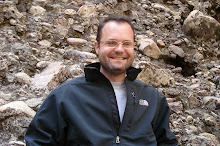
By: Mike Escalante, Program Director


I started working for a wilderness therapy program in 2003. When I began, I think only the “wilderness” part of wilderness therapy had caught my attention. I instantly fell in love with the job as it entailed hanging out with a bunch of guys in a beautiful Arizona mountain landscape. As time went on, I worked for other programs and became more and more aware of the “therapy” side. I became introduced to a variety of therapeutic theories and intervention modalities focused on facilitating change. Some of these theories interested me and others felt hokey or even oppressive.

By the time I worked for my third program, I honestly felt flooded in a sea of information and theories about “change” that oftentimes seemed to miss the mark. One theory seemed to contradict another while others seemed to be a lexical reorganization of yet other theories. After years of working with youth and implementing a whole gamut of interventions, I discovered a fundamental and necessary component of “change”. Stated simply, I learned that seeds of growth can only take root in a person when he is open to the idea of growth. I realized that each student I work with had to come to a place in their heart and mind where they were at peace with a successful outcome. When students found this open place, seeds of change could be planted and cultivated.

After making my long overdue discovery, a few things became apparent. When at war emotionally with others, we excuse ourselves from our negative behaviors. Therefore, accusing is almost always accompanied with excusing. In other words, if a student is focused on how she has been wronged by her parents and program staff than she will naturally accuse others of warped perception and excuse her actions in the interplay. Terry Warner eloquently explains this paradigm in his masterpiece The Bonds That Make us Free.

These realizations fostered a significant change in the way I viewed my role. As a caregiver, mentor or guide, my greatest challenge and responsibility was to invite my students to an open place. Openness, I have found, is the only foundation that supports the weight of lasting change. Of course my realization was not accompanied by a universal equation for eliciting openness. Rather, my realization has helped me develop a new focus and realize that my invitation must come from a place of personal openness and peace.

Fortunately, I found Aspiro, or Aspiro found me.

Aspiro is an organization that actively seeks to instill a sense of openness in its employees and students.

Furthermore, Aspiro explicitly invites openness with our students’ families during our family workshop.

It has been awesome to see parents and children drop their accusing and excusing emotions and hence regain the ability to see themselves and others clearly.

Now, as the program director for Aspiro, I get to work closely with guides and clinicians in training and program development. I am constantly astounded at the simple ways our field guides and clinical staff touch the lives of the students we work with.Throughout the years I have studied many therapeutic theories that have appropriate application to our work, yet none of them have the power to foster change if the person most in need of change is at war with the idea. My invitation to all of my employees, as well as to anyone who works in our important industry, is to free ourselves as much as we can from accusing and excusing emotions so that we can invite the same in our students.

Monday, December 15, 2008

Choosing Aspiro - By Brad Carpenter, Psy.D.


Perhaps you as a parent or an educational consultant are considering the same thing. I was about a year and a half ago.


Mine is a different story, however, which began about 14 years ago at a military base in Atlanta, Georgia. This was my introduction to therapy and needed transition from an academic knowledge of psychology to reality.


My first client, a 40 year old African American woman suffering from depression, left the session somewhat exasperated and remarked that she couldn’t believe that “Donnie Osmond” was her new therapist.This was precisely when I began wearing suspenders and a tie to work every day in an effort to achieve age and credibility. My second client was a couple who came for marital therapy and promptly asked if I was married or had any children. Quick witted, I replied something to the effect that I didn’t need to be shot to know that it would hurt!


This, my valiant attempt to explain that it was not necessary to have first hand knowledge of their situation to be a good therapist, a message understandably obscured by the comparison of marriage to a mortal injury.


Needless to say, I learned to button up more than my oxford after this and listen.


My third client was a bright 15 year old girl who was seen because of oppositional behaviors and underachievement. Having problems getting her to speak I decided to join her in silence, a technique I learned from Robin Williams in Good Will Hunting, not my graduate psychotherapy course.


Instead of paving the way for the dramatic break through, she yelled at me and told her parents I wouldn’t even talk in therapy. They were naturally concerned.


Almost a decade and a half later, armed with wisdom, experience and a receding hair line I was lucky enough to have a choice as to the direction of my career. Over the years I had specialized as a diagnostician, performing psychological neuropsychological assessment with a secondary role as a therapist. I was moonlighting as an adjunct professor of psychology for a local college when I was asked to teach an introductory therapy course to graduate counselors. For a while I was a back to where I started, rediscovering my roots as a therapist, joking with my students about my pop star past and preparing them for what’s to come. What I have learned over the years is that therapy is an art and while there are some who would disagree with this statement as is, they may not disagree with the assertion that adolescent therapy is an art. I could say this with some certainty after working in the therapeutic boarding industry for almost three years while contracting with an adolescent wilderness therapy program. I was particularly intrigued by the prospect of the adolescent wilderness experience and heard the buzz that some colleagues had taken this concept a step further, creating a high adventure therapy program called Aspiro.


Disillusioned by the status quo and the primitive wilderness model, I was excited to hear that the industry was evolving. Fortunately, I had many choices, but realized after a brief visit that I had found my dream job and quickly made the decision to move across country to join the group.


Aspiro has taken the successful elements of traditional wilderness therapy and raised the bar significantly.


When I refer to a “primitive” wilderness therapy model, I don’t mean to discount the effectiveness or inherent sophistication of a model which has helped countless numbers of adolescents in beginning to turn their lives around. I simply refer to an outdated traditional model in which adolescents learn basic skills (breaking a fire) while backpacking around a restricted area, sometimes far away from civilization.


Aspiro’s adventure therapy model combines the benefits of the traditional wilderness experience with overwhelming mastery experiences - climbing 200 feet off the ground, free rappelling a 150 foot arch, paddling a class 4 rapid, summiting a 13,000 foot peak, building ice caves, skiing, snowboarding and mountain biking.


And best of all, I’m right there with them.


My first therapy experience at Aspiro was paddling a 25 mile stretch with a student who had recently become involved in drugs, an intelligent young man who I had seen a hundred times before in a different setting.


It was here though, floating down the Green River that I knew I had shed my suspenders for good, in this place without walls, florescent lighting or plaques. I was no longer just an authoritarian but a participant, paddle in hand. It was in this place and many others since that I noticed the resistance I had encountered in a traditional setting was no longer there or significantly diminished. Suddenly the clients were negotiating their way through tricky situations, ones I didn’t read about in an intake report but was observing in the moment.


They were there, right before my eyes, pushing themselves, interacting with other students and all the time humbled by nature. Not only were we collaborating in therapy but together we had accomplished something significant by days end. The students were building confidence and learning real skills through mastery experiences. They were more alert and receptive from the adventure and the novelty of the environment, a benefit also shared by myself. Every week I knew that when I saw my student, he/she would have a story to tell me, a story of struggle and accomplishment. This was the same story I heard a year later from the student I shared a paddle with my first day. He had continued his adventure in Costa Rica, drug free, now a high school graduate and using the same skills he had learned a year earlier at Aspiro.


So choose wisely as I did. Every student and family situation is unique and every therapist has a different calling. I found mine here in Utah. In the past year, Aspiro bought out its parent company and is now independently owned by its therapists and the original founders who have a personal stake in its success. We have grown, refined our model and adapted to the needs of our students, families and consultants.


This is by far the coolest place I have ever worked and I appreciate all the support I have received from our staff, my students and the many parents and consultants I have worked with since joining Aspiro.


Dr. Brad Carpenter - Psy.D.

Friday, November 28, 2008

Judith E. Bessette, EdD, Visit October 25, 2006


Since the writing of this original article in October 2006, Proficio Management, Inc. and Aspiro Inc. jointly announced the acquisition of Aspiro, Inc. as of Friday, 14 March, 2008 by Aspiro's current leadership team and clinicians. The purchase, in which the entire executive team and all Aspiro clinicians participated, will ensure continued delivery of high quality services to troubled youth and families in an innovative format for years to come.

Proficio formed and founded Aspiro with Randy Oakley in April of 2006.

The sale by Proficio to the leadership team of Aspiro allows Proficio to focus on other exciting ventures while enabling the Aspiro Team the flexibility that direct ownership provides to ensure quality, manage growth, and effectively respond to client needs.


That being said .........

Judith E. Bessette, EdD

When I first read about Aspiro, a wilderness program that opened last spring in Utah near Park City, and read their description of the program as cutting-edge, I was skeptical.

I thought, "Aren't they all cutting edge, new and different?" And, I thought, do we really need another wilderness program?

But the more I read and the more I learned about the talent Aspiro had gathered together, the more I knew I needed to visit and see what it was all about, first-hand. Meeting Randy Oakley and his wife, Christina, at a regional NATSAP meeting just fueled my interest in visiting. Randy is the founder of the program and Christine wears two hats there. She's in charge of Business Operations but loves getting out with the kids in her role as a Lead Guide.

In October, Linda Cain and I met Brian Church at Utah Olympic Park, built in Park City for the Winter Olympics in 2002. Brian is the Director of Business Development. It was a gorgeous, crisp, sunshine-filled day and the ride to Hanna, where Aspiro's base camp is located, was beautiful.

As we came up to the top of a hill, the base camp came into view, set in front of an unusual formation of red rock.

And, a river runs through it - a lovely stretch of the Duchesne.

We sat down with Randy and watched an amazing video. It was amazing on several levels - not the least of which was the footage of various adventure activities including whitewater river rafting and canoeing, skiing, snowboarding, top-rope rock climbing, caving (in slot canyons, mind you) , mountain-biking, horseback riding and the like - but also because the video captured the sense of accomplishment of the students in the program. One of the hallmarks of Aspiro's program is taking kids to the highest of highs in their outdoor experiences and you could see the results of that approach. When we learned that this video was a creation of one of the students, it made it even more remarkable.

We had the opportunity to meet Ken Betts, Program Director, Justin Robinson, the Director of Clinical Services as well as Farrah and Bridger Jensen, both Field Directors for Aspiro. Their combined years in the wilderness, working with troubled teens are impressive. I was struck by the fact that each of these individuals articulated the same mission and vision of the organization. Each talked about the importance of genuine relationships, of developing self-efficacy and about the true meaning of wilderness therapy versus offering therapy in the wilderness.

Randy has dreamed of running a program like Aspiro - which means to achieve, aspire or infuse with spirit - since 1988. At an IECA Conference in 2004, Randy (who was then at West Ridge Academy) participated in a brainstorming session with other West Ridge staff focused on "what a wilderness program might look like if you were designing it for your own kids."

At the conclusion of the conversation, Ken Allen, the head of West Ridge (and a strong financial backer of both programs) asked Randy to figure out what he needed to get the program off the ground…and Aspiro took its first students in April of 2006.

While a number of their first students were kids having trouble at West Ridge, those students are no longer the majority of the students at Aspiro. In addition to taking referrals from educational consultants, Aspiro is also working with students from other residential facilities who have fallen off their track and need to refocus.

Aspiro invites that school or facility to play an active role on the treatment team so when the student returns to the facility that sent him or her to Aspiro, every one is on the same page.

Using a rolling admissions approach, appropriate candidates are males and females, ages 13-17, and young adults, ages 18 to 30 years of age, with a history of moderate emotional and behavioral problems, low self-esteem, academic underachievement, substance abuse and family conflict. On a consulting basis, Aspiro is served by Leroy Anderson, MD, a child/adolescent psychiatrist who has a quite a reputation in the canyoneering world. Matt Eschler, LMFT, provides parenting workshops and aftercare services as needed and Chris McRoberts, PhD supervises a team of psychologists who test kids out on the trail. We were impressed with the kids who visited with us just before leaving base camp for a several day trek in Moab.

We talked with kids who'd been there for several weeks as well as one who had arrived only a few days earlier. They were complimentary about the staff - especially in regard to feeling respected and heard when they talked. They were excited about the trip and looking forward to the challenges ahead. One or two said the food could be better - but after all, they are teenagers!

Aspiro really is new and different - and here are several reasons why. This relationship-based program treats kids with an uncommon degree of respect for who they are and the strengths they bring with them to base camp and out on the trail. A recent visitor who sat in on an intake interview likened the experience to watching a high school student transfer from one school to another. Aspiro uses a solution-focused therapy model combined with adventure therapy to build self-efficacy and discover new coping strategies for dealing with old issues. There are several credentialed recreation therapists on staff who are always looking for the accommodations that will allow every student to get the most out of the program. Aspiro looks for the best and the brightest in its staff - and is open to each and every staff member owning a piece of the program.

This philosophy should create stability in the staff at all levels - not just at the top.

And, Aspiro takes some other chances that set them apart. We learned about a seriously overweight kid who prospered there - and began loosing weight. We learned about their ability to handle kids with diabetes - a real challenge in the wild. We also learned that the admissions team has the ability to work with families who are stretched financially - an unusual circumstance for so new a program but yet another example of what makes Aspiro genuinely new, different and cutting-edge.

Josh Watson, LCSW, Dir. Of Admissions
801-979-6308
jwatson@aspiroadventure.com
www.aspiro-inc.com

Judith E. Bessette, EdD, Visit October 25, 2006
(414) 581-9146