Showing posts with label high-impact adventure therapy. Show all posts

Tuesday, January 27, 2009

Awesome Quote


By: Brian Church, V.P. Business Development

A very good friend of mine passed this quote along a couple of weeks ago. I love it because it is so descriptive of what students and employees experience at all of the Aspiro programs. This quote is a perfect precursor to our next blog entry by Dan LeMaire which will be posted later today or tomorrow. I thought I would share it with all for your enjoyment:

"Everest is a pressure cooker that forces us into rigorous self-examination. Part of Everest's magic rests in the painful reality we find inside us. Everest exposes things about ourselves we often successfully hide at more reasonable altitudes."

"The larger question is ultimately, will we hide from our new self-knowledge, or will we change and grow from it? Most searingly difficult experiences are like this. They are characterized by pain and loss, achievement and gain. The only guarantee of failure comes from our refusal to grow from our new self knowledge."

--Alan Hobsen

Sunday, January 4, 2009

Why We Still Work for Aspiro...


By Jodi Escalante, Assistant Program Director

I never would have guessed that my husband, Michael and I would still be working at Aspiro. When we first heard about Aspiro, we had only been married about 6 months. We were both attending college and thought this would be a fun summer job, where we would get to work together. We had both worked in traditional wilderness programs before, but never together.

And just to sound cliché, we started an adventure that we’ve yet to end.

That first summer was truly amazing: canoeing on beautiful Lake Powell, exploring the majestic slot canyons of Central and Southern Utah, exploring caves and rappelling, rock climbing all across the state, and hiking through the most beautiful areas that I never knew existed.

In the fall, we returned to school to finish our undergraduate studies, but every weekend we traveled out to our groups and trained the newer guides.

When Michael and I graduated (April 2007), we returned to Aspiro full time because we were hooked.

As noted earlier, we had both worked for primitive model wilderness programs. However, after working at Aspiro neither of us could imagine working at a wilderness program without the ADVENTURE. We pushed our students harder, faster, and farther than either of us had previously experienced.

Since that first summer at Aspiro I have embarked on so many beautiful and amazing adventures and have built some unforgettable relationships with students.

I guess that’s my other favorite thing about Aspiro we emphasize stronger relationships than the norm.

Given the high impact adventures, we have an amazing opportunity to help someone through a physically or emotionally challenging experience, to push them beyond their comfort zone to higher ground. And when the dust settles and the high fives and hugs are done, and they’ve overcome their seemingly impassible struggles, we learn from the metaphors; teacher and student alike.

Wednesday, December 24, 2008

The Shave of Christmas Continues


On the fifth day of Christmas Justin gave to his kids, wife, co-workers and friends .......


And ...... For those of you who are staying true to the cause ... I thought I would give you a break and include some background in this one. If you don't recognize the backdrop it is Delicate Arch in Arches National Park where we visited with the students yesterday and enjoyed a fun holiday party.


Sunday, December 21, 2008

The Seven Shaves of Christmas - Day Two


We appreciate all the comments and empathy. The saga continues with day two - The Second Shave of Christmas.

Happy Holidays!


Thursday, December 18, 2008

Spotlight: Clinical Director, Justin Robinson


Justin has been with Aspiro since its inception in April of 2006. Justin brought with him a wealth of experience.


His undergraduate degree is in Recreation Therapy and his Masters Degree is in Social Work. Justin has been working with adolescents for about twelve years in a variety of settings and capacities.


Justin started in the field as a live-in counselor at a Therapeutic Boarding School.


Shortly after getting married Justin and his wife spent a year working as home parents in a group home. He then worked as a Recreation Therapist in an RTC.


From there, Justin spent a short time leading psycho-educational groups in the Utah state prison. While working at the prison he was asked to develop a Recreation Therapy program to work in conjunction with the existing psycho-educational classes.


Justin has also facilitated adolescent outpatient therapy, but the majority of his experience as a therapist has been working with adolescents and their families in a Therapeutic Boarding School.


With his background in recreation, Justin has always been drawn to experiential learning.


“While working in residential treatment, I found I could accomplish more with a student in a week in the outdoors than I could in months of therapy in the office. When I saw what Aspiro was doing, I jumped at the opportunity to be involved,” said Robinson

Justin grew up in Utah, however, he has also lived in Hawaii, Alaska, and Puerto Rico. Justin is married and has four kids. In addition to raising four children, Justin and his wife have also (until recently) been temporary foster parents to adolescents transitioning from treatment. In total they have had over a dozen teens living with their family.

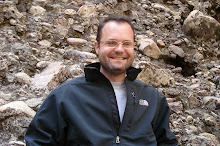
Director of Clinical Services - Justin Robinson, LCSW

Monday, December 15, 2008

Choosing Aspiro - By Brad Carpenter, Psy.D.


Perhaps you as a parent or an educational consultant are considering the same thing. I was about a year and a half ago.


Mine is a different story, however, which began about 14 years ago at a military base in Atlanta, Georgia. This was my introduction to therapy and needed transition from an academic knowledge of psychology to reality.


My first client, a 40 year old African American woman suffering from depression, left the session somewhat exasperated and remarked that she couldn’t believe that “Donnie Osmond” was her new therapist.This was precisely when I began wearing suspenders and a tie to work every day in an effort to achieve age and credibility. My second client was a couple who came for marital therapy and promptly asked if I was married or had any children. Quick witted, I replied something to the effect that I didn’t need to be shot to know that it would hurt!


This, my valiant attempt to explain that it was not necessary to have first hand knowledge of their situation to be a good therapist, a message understandably obscured by the comparison of marriage to a mortal injury.


Needless to say, I learned to button up more than my oxford after this and listen.


My third client was a bright 15 year old girl who was seen because of oppositional behaviors and underachievement. Having problems getting her to speak I decided to join her in silence, a technique I learned from Robin Williams in Good Will Hunting, not my graduate psychotherapy course.


Instead of paving the way for the dramatic break through, she yelled at me and told her parents I wouldn’t even talk in therapy. They were naturally concerned.


Almost a decade and a half later, armed with wisdom, experience and a receding hair line I was lucky enough to have a choice as to the direction of my career. Over the years I had specialized as a diagnostician, performing psychological neuropsychological assessment with a secondary role as a therapist. I was moonlighting as an adjunct professor of psychology for a local college when I was asked to teach an introductory therapy course to graduate counselors. For a while I was a back to where I started, rediscovering my roots as a therapist, joking with my students about my pop star past and preparing them for what’s to come. What I have learned over the years is that therapy is an art and while there are some who would disagree with this statement as is, they may not disagree with the assertion that adolescent therapy is an art. I could say this with some certainty after working in the therapeutic boarding industry for almost three years while contracting with an adolescent wilderness therapy program. I was particularly intrigued by the prospect of the adolescent wilderness experience and heard the buzz that some colleagues had taken this concept a step further, creating a high adventure therapy program called Aspiro.


Disillusioned by the status quo and the primitive wilderness model, I was excited to hear that the industry was evolving. Fortunately, I had many choices, but realized after a brief visit that I had found my dream job and quickly made the decision to move across country to join the group.


Aspiro has taken the successful elements of traditional wilderness therapy and raised the bar significantly.


When I refer to a “primitive” wilderness therapy model, I don’t mean to discount the effectiveness or inherent sophistication of a model which has helped countless numbers of adolescents in beginning to turn their lives around. I simply refer to an outdated traditional model in which adolescents learn basic skills (breaking a fire) while backpacking around a restricted area, sometimes far away from civilization.


Aspiro’s adventure therapy model combines the benefits of the traditional wilderness experience with overwhelming mastery experiences - climbing 200 feet off the ground, free rappelling a 150 foot arch, paddling a class 4 rapid, summiting a 13,000 foot peak, building ice caves, skiing, snowboarding and mountain biking.


And best of all, I’m right there with them.


My first therapy experience at Aspiro was paddling a 25 mile stretch with a student who had recently become involved in drugs, an intelligent young man who I had seen a hundred times before in a different setting.


It was here though, floating down the Green River that I knew I had shed my suspenders for good, in this place without walls, florescent lighting or plaques. I was no longer just an authoritarian but a participant, paddle in hand. It was in this place and many others since that I noticed the resistance I had encountered in a traditional setting was no longer there or significantly diminished. Suddenly the clients were negotiating their way through tricky situations, ones I didn’t read about in an intake report but was observing in the moment.


They were there, right before my eyes, pushing themselves, interacting with other students and all the time humbled by nature. Not only were we collaborating in therapy but together we had accomplished something significant by days end. The students were building confidence and learning real skills through mastery experiences. They were more alert and receptive from the adventure and the novelty of the environment, a benefit also shared by myself. Every week I knew that when I saw my student, he/she would have a story to tell me, a story of struggle and accomplishment. This was the same story I heard a year later from the student I shared a paddle with my first day. He had continued his adventure in Costa Rica, drug free, now a high school graduate and using the same skills he had learned a year earlier at Aspiro.


So choose wisely as I did. Every student and family situation is unique and every therapist has a different calling. I found mine here in Utah. In the past year, Aspiro bought out its parent company and is now independently owned by its therapists and the original founders who have a personal stake in its success. We have grown, refined our model and adapted to the needs of our students, families and consultants.


This is by far the coolest place I have ever worked and I appreciate all the support I have received from our staff, my students and the many parents and consultants I have worked with since joining Aspiro.


Dr. Brad Carpenter - Psy.D.

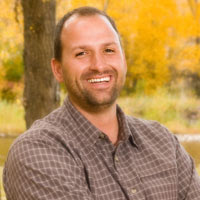
Spotlight: Aspiro Admissions Director - Josh Watson, LCSW


The unique vision of Aspiro convinced Josh that he needed to make a move from the Southeast all the way to the beautiful state of Utah. After spending several months learning about Aspiro’s innovative approach through high-impact adventure therapy, Josh and his family decided to join the Aspiro team back in October of 2006.


“After doing my research it wasn’t hard for Brian Church, a former colleague of mine, and now the Director of Business Development for Aspiro, to convince me that Aspiro would be the pioneer for a new and more effective outdoor therapy model,” said Watson.

Josh has a Master’s Degree in Social Work and over seven years of experience working with adolescents and families in crisis.


Over the past several years he has been a therapist and an admissions officer for a therapeutic boarding school.


As the Director of Admissions, Josh will be working diligently with consultants and families on assessment, communication, and quality control. His clinical experience is rich with diversity and he has a genuine desire to help others.


“Aspiro has managed to exceed all of my expectations. It is a breath of fresh air for me to see students smiling as they achieve success on a very high level. I am privileged to work with such a dynamic team that is truly committed, authentic, and unified in their approach.”


Please feel free to contact Josh directly to learn more about his personal journey, and to find out more details about Aspiro.


jwatson@aspiroadventure.com.


Admissions: 888-266-5136 www.wherehealingstarts.com